
Practical Evangelism in the Church
The most enduring learning takes place when the local church gathers to examine its own reactions to the world's objections. Discover how to organize evangelistic enactments with the congregation, confronting fear, moralistic shortcuts, and learning to proclaim the grace of Christ with faithfulness.
The Three-Character Dynamic
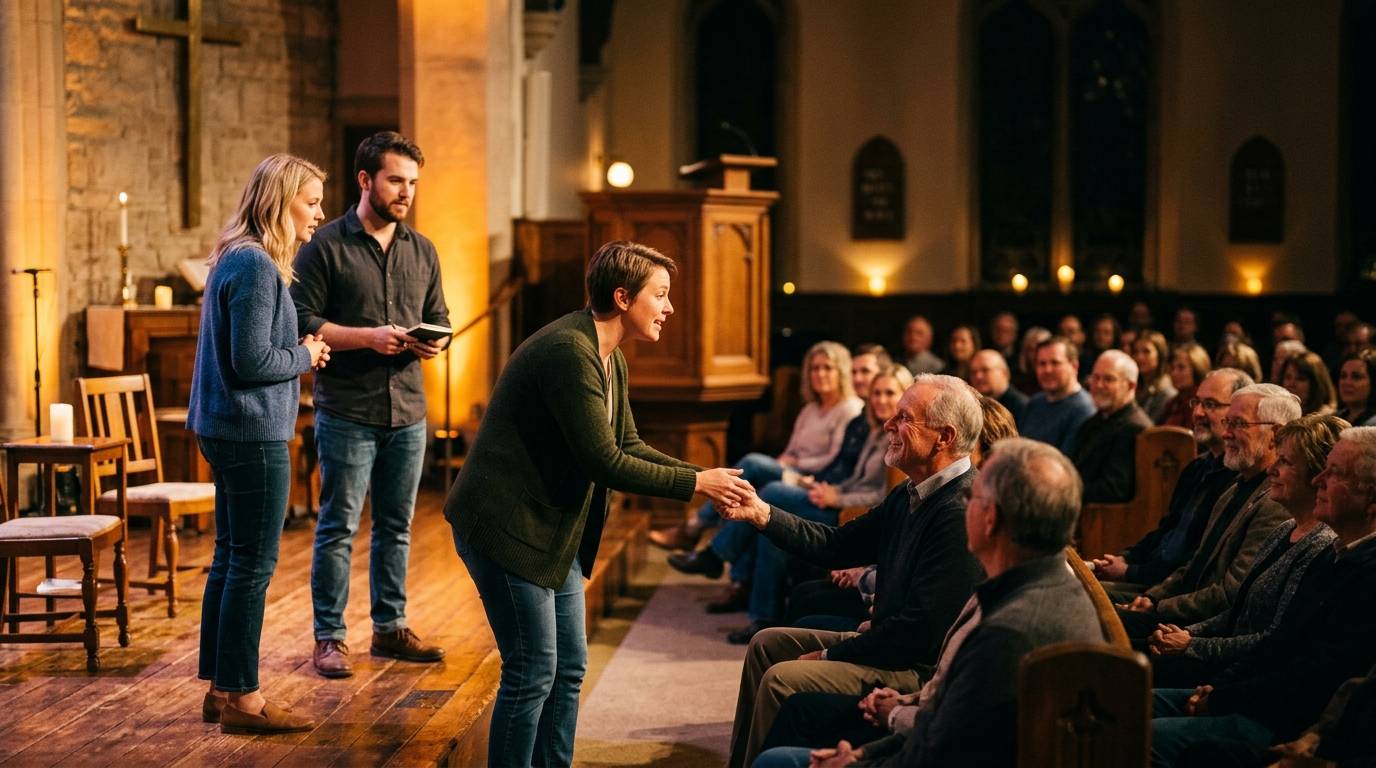
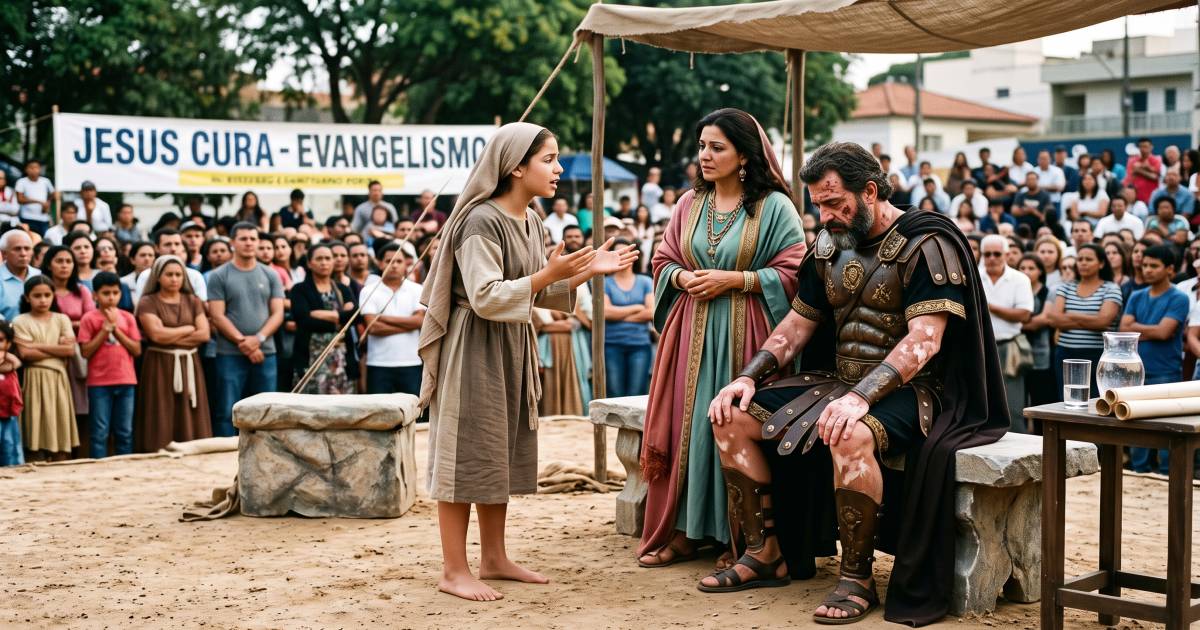
The training requires no theatrical production or acting experience. It relies on a simple division of three roles to expose the genuine dilemmas of an evangelistic conversation in real time.
The Evangelist
The brother or sister tasked with initiating dialogue and sharing the gospel. Their challenge is to listen attentively, avoid defensive or canned answers, and keep Christ at the center of the conversation, even in the face of rejection.
The Interlocutor (Addressed)
Represents the skeptic, the hurt family member, the indifferent coworker, or the religious moralist. Their role is to sustain honest, everyday objections without easy concessions, reflecting the authentic resistance of the human heart.
The Pastoral Commentator
An experienced pastor or leader who pauses the enactment at crucial turning points of the dialogue. Opening the Scriptures for the congregation, they examine what was said and explain why certain responses hinder or open hearts to the gospel.
How to Lead the Dynamic in the Gathering
Three distinct phases to guide congregation participation and keep the focus firmly rooted in Scripture.
Selection and Advance Reading of the Scenario
Select in advance the scenario that will be examined, whether one of the project's simulations or a common situation faced by members of the church. The trio must understand the core tensions of the story before presenting in the sanctuary or classroom.
Spontaneous Dialogue with Real Mistakes
The two participants begin the conversation. To instruct the church, the evangelist does not need to get everything right at first: they can demonstrate impulsive, moralistic, or impatient replies, allowing the congregation to witness the tangible impact of an unhelpful approach.
Pastoral Intervention with the Church
At the peak moment of tension or misdirection, the scene freezes. The pastor steps in, asks the congregation what they noticed, and opens Ephesians 4:29 and related passages, teaching how grace ought to respond in that situation.
Practical Considerations for Facilitators
Discarding Religious Jargon
Encourage participants to speak without theological insider terms that only make sense inside church walls. Those unfamiliar with the Bible need to hear the gospel with simplicity and human clarity.
Listening Before Proclaiming
The enactment must show that biblical evangelism is not an impatient monologue. Without genuine concern for a neighbor's burdens, one rarely earns a listening ear for their heart.
The Teaching Value of Mistakes
The goal of the exercise is not a flawless performance. Observing a common blunder firsthand, such as reacting harshly or arguing defensively, engages the congregation and cements the biblical lesson.
Active Congregational Involvement
The pastoral commentator should avoid lecturing alone. At moments of doubt, pause and ask the brothers: "If you were there at that moment, which biblical text would you bring up?".
Available Simulations for Study
Our library offers dozens of contemporary situations prepared for group study, hospital visits, workplace tensions, family conversations, and other interactions. Select a scenario as the starting point for your next mid-week gathering or Sunday school class.
Explore the SimulationsThe Church's Labor Beyond the Classroom
The classroom exercise is only the beginning. True maturity develops when the congregation understands the biblical foundations of evangelism and actively supports one another in daily witness.
Faithfulness Over Statistics
Perseverance Over Time
Doctrine That Grounds Practice
The Gospel in Everyday Relationships
Supporting the Timid and Newer Believers
Space to Discuss Heartaches and Frustrations
Visual Resources in Church Gatherings
While the message of the gospel never changes, the tools a church uses can adapt to each congregation's context. Here is how to integrate simulation scripts into the regular rhythm of services and meetings with simplicity.
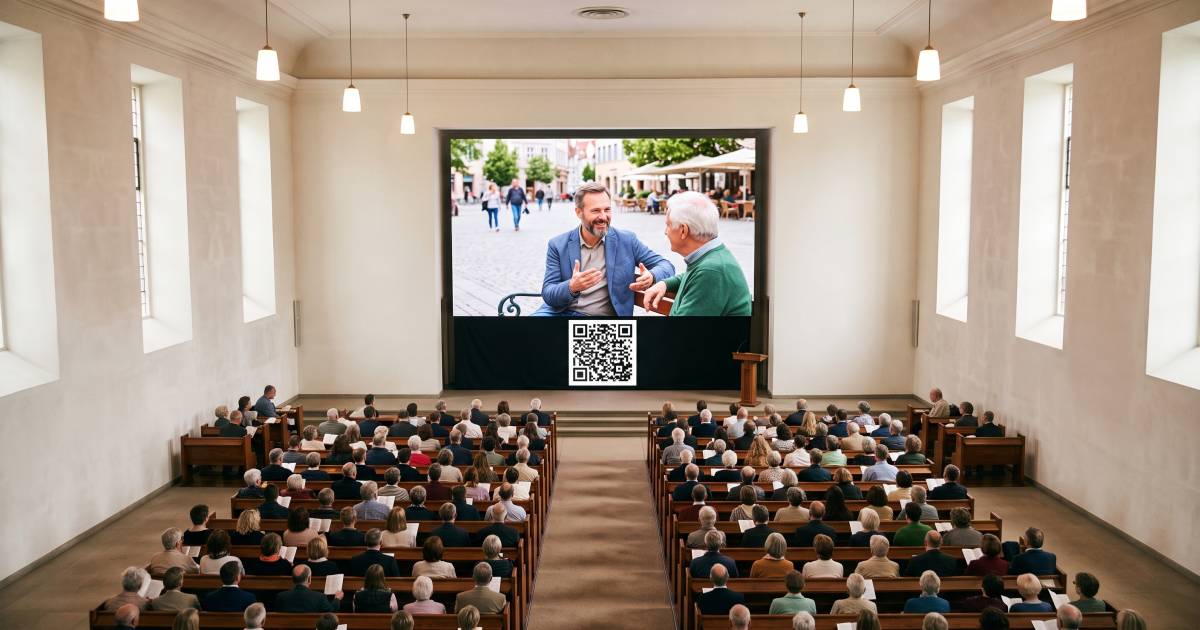
Screen Projection for Group Discussion
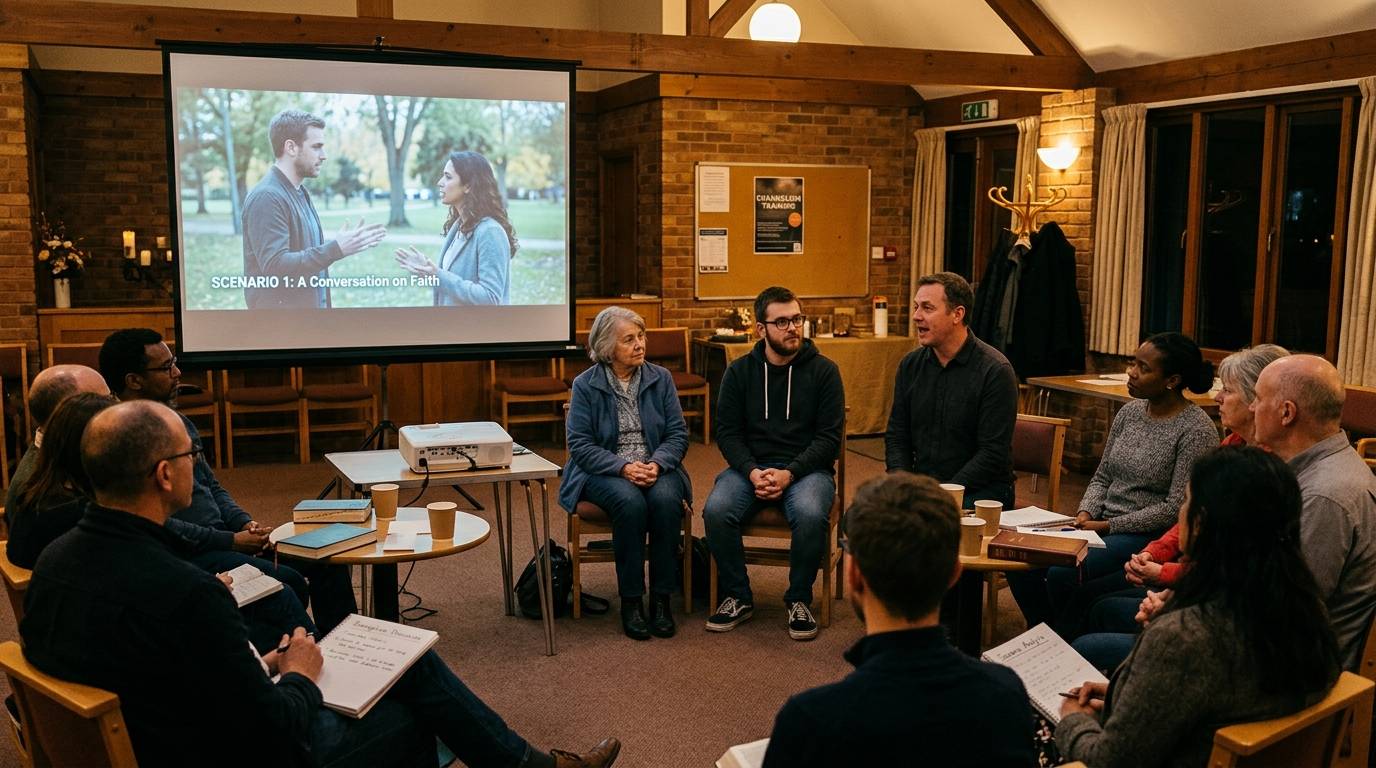
Display previously recorded evangelistic interactions during an appropriate service, allowing everyone to follow the narrative and actively participate, collectively choosing how the character should respond and reflecting on each decision in light of gospel principles.
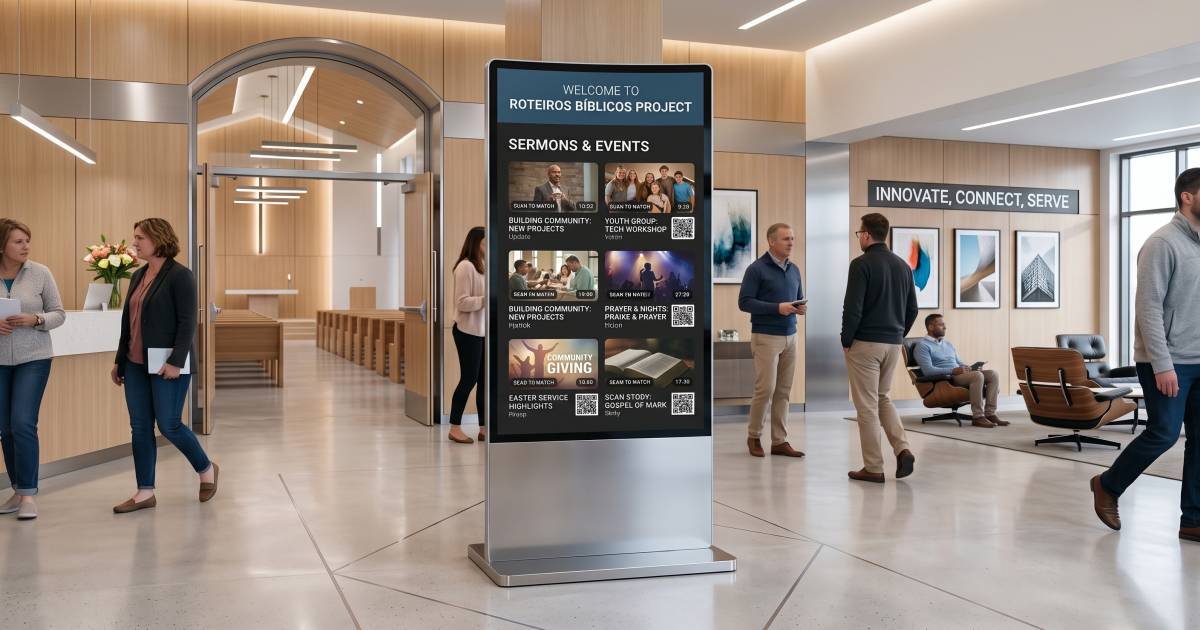
QR Code for Personal Study
Include the link or QR access code on the weekly bulletin or announcement screen, enabling members to continue reading and reflecting on the scenarios at home throughout the week.

Printed Handouts and Discussion Boards
For congregations with limited multimedia infrastructure, simulation dialogues and discussion questions can be printed as bulletin inserts or posted on church boards for small group study.



Focusing on Substance, Not Technological Novelty
The fruitfulness of evangelism training does not depend on the amount of technology employed, but on the biblical clarity of the message delivered. Whether through high-definition projectors or simple printed sheets, what truly equips the Christian is a lucid understanding of the gospel and prayerful dependence on the Holy Spirit.